Saturday, August 4, 2012

Tour of the Cotswolds

The following information I learned from Philip Baum, my tour guide in the Cotswolds.  If you have ever seen the British show Vets in Practice and paid attention to the narrator's voice, then you know exactly how Philip's accent sounded.  He was a wonderful guide, part architectural historian, part linguist, part comedian.

The Cotswolds is an 880 square mile area west of Oxford.  "Cote" was an Old English word meaning 'an enclosure for an animal' and "wold" meant 'bare, rolling hillsides.'  This picturesque area used to be THE place for raising sheep for wool in England, but the Industrial Revolution brought the steam-powered loom for which the Cotswold wool was too brittle.  This new technology knocked the Cotswolds off the map for about 200 years, but now the villages are sustained by agriculture, raising sheep for meat, and tourism (British citizens vacation here as well).  This is an area where you will still find estate villages with a lord of the manor and people who rent from the lord and work in the fields.  Some villages we drove through, and in other villages we were able to stop, shop, and eat.  All of the villages today have building restrictions and must build using either Cotswold stone or reconstituted stone that looks like Cotswold stone.  The British government has recognized this area as a place of extraordinary beauty and values its history and preservation.

A bicycle parked outside my B&B this morning.

Classic.

Notice that they don't use mortar in their walls.

In the village of Taynton


How soon can the Loosens move in?

A duck race for charity taking place in Bournton-on-the-Water

Idea for an MSL fundraiser?


There are 30 million sheep of over 300 breeds in England.


In Upper Slaughter.  "Slaughtre" was an Old English word for 'wet place.'


Upper Slaughter is one of only 14 "doubly thankful" villages in England.  That means that none of the men they sent to WWI or WWII died.

This baptismal font dates back to 1320.  In Victorian times, they found it ugly and replaced it.  People found it buried in the churchyard within the past ten years and replaced the Victorian font with it.


St. Peter's Church in Upper Slaughter


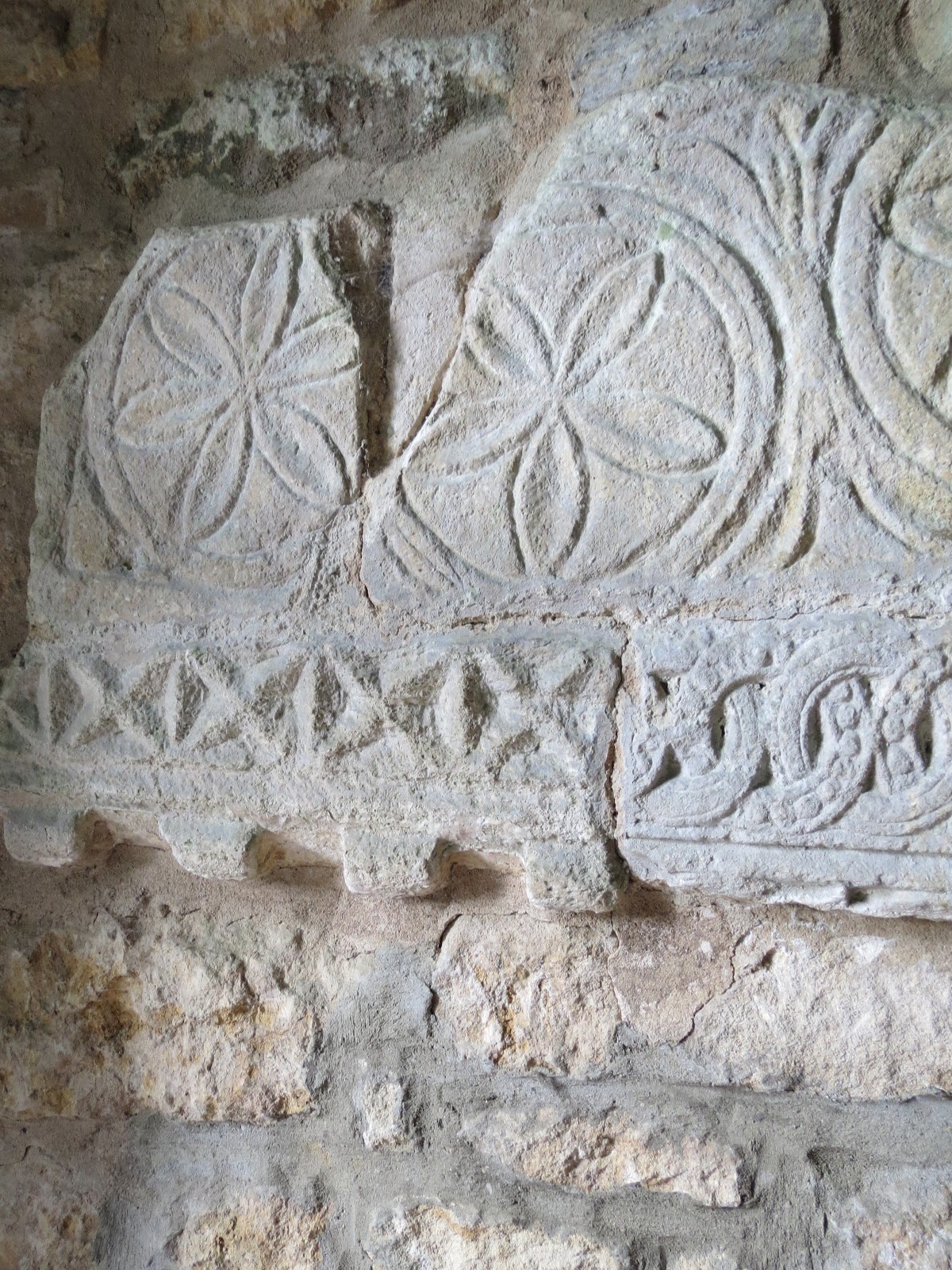
This carving is about 900-1,000 years old.


A lavendar farm

I wish I could include a link to the scent of this field.


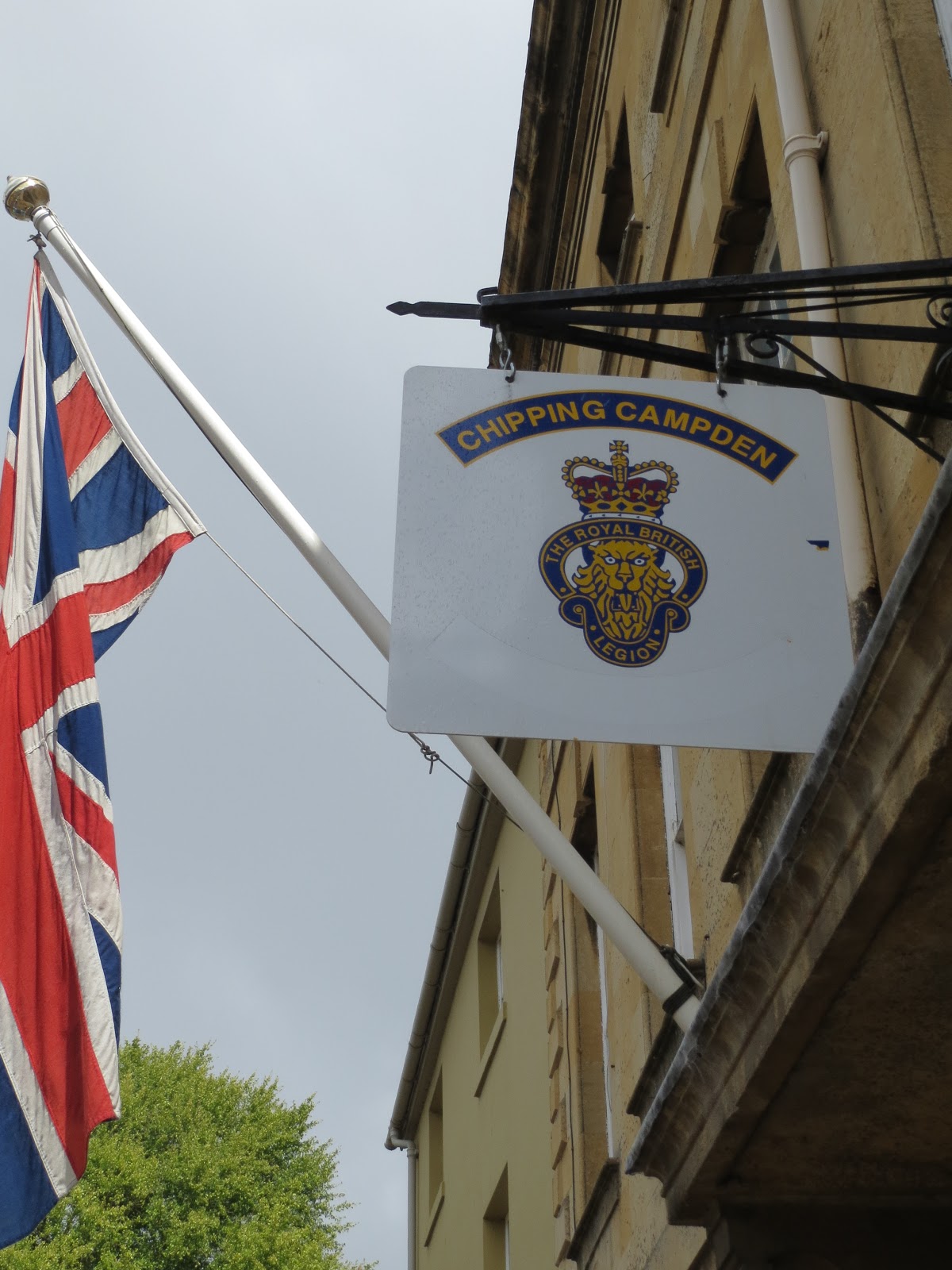
Chipping Campden celebrates the Olympics at its market hall from 1627.


Students, name the famous playwright from Stratford-on-Avon.


They advertise ice cream cones everywhere.  I had to get one.


Our guide Philip at a "mideval cart wash."  They didn't want the muddy wheels of the carriages dirtying up Chipping Campden.


This tomb has carvings on top of the people lying inside.  I found this to be very bizarre.  The story, too, is that the woman didn't want her carving revealed until after she died, but she lived to be 95 and her carving was revealed when she was 80.  Awkward...

Some rain today


Vegetables for sale in the village of Broadway


Village of Stow-on-the-Wold (which means 'meeting place on a hill').  This is one of the highest points in the Cotswolds at 800 feet above sea level.


Back in Oxford, this is the pub where C.S. Lewis and J.R.R. Tolkien used to meet to chat after teaching classes all day.

Hmmm, Linguistics students...how do we get an invitation to visit this place?


Friday, August 3, 2012

River Cruise and Christ Church Meadow


After visiting the Ashmoleon Museum, I went back out walking in the city and spontaneously decided to do a 40 minute river cruise on the Thames (which is actually called the River Isis as it passes through Oxford).  I finished the evening by checking out the longhorn cattle and having a picnic in Christ Church Meadow.


Training for Rio 2016?


Entering Christ Church Meadow


I've never had a skeleton key for a hotel room before!

Where I'm currently staying
`

Arriving in England and the Ashmoleon Museum

I left Milwaukee Thursday evening and made it into London Friday morning.  I took it as a good sign that I found my luggage right away on the carousel at Heathrow.  I then boarded a bus for an hour-long drive to Oxford (I guess it was actually a bit longer since the driver got lost twice getting out of London!).  I decided to walk the 1+ miles to get to the bed and breakfast where I'm staying for two nights until I move into the dorms at Christ Church.

Tough to say good-bye to my little guy

Assigned reading for my class

Over Lake Michigan

Full moon over Toronto

My tiny room in Oxford


I spent the afternoon and evening exploring and getting myself acquainted with the city.  I had been planning to visit the Ashmoleon Museum while I was here and since I stumbled across it, I ran in for an hour before they closed.  The museum has free admission and an incredible collection of artifacts and artwork from thousands of years ago to the present time.  I saw so many works by painters I studied in my Art History class this summer...Hals, Tintoretto, Cuyp, van Dyck, van Gogh, Matisse, Pisarro, Monet, Manet, and sculptures by Degas and Rodan.  I'll probably go back when I can spend more time there.

Walking towards Christ Church

The Ashmoleon Museum

Mysterious door

Not sure what this means.

Inside the Ashmoleon

My students love their Greek and Latin root words!

A Wall of Busts

Bernadino Licinio's Portrait of a Young Man with a Skull (1490)


Camille Pissarro's Mme Pissarro Sewing Beside a Window


from Pissarro's Pointilism phase

J.M.W. Turner's View of High Street, Oxford:  Still looks very similar!


Sir George Clausen's Farmer's Boy (1884)


Wednesday, August 1, 2012

Oxford


A few months ago, I found an original copy of a book about Oxford published in 1903.  I knew I had to buy it after reading this opening passage by Edward Thomas:

"Passing rapidly through London, with its roar of causes that have been won, and the suburbs, where they have no causes, and skirting the willowy Thames,--glassy or silver, or with engrailed grey waves--and brown ploughlands, elm-guarded, solitary, I approached Oxford.  Nuneham woods made one great shadow on the land, one great shadow on the Thames.  According to an old custom, it rained.  But rain takes nothing from Oxford save a few nice foot passengers.  It transmutes the Franciscan habit of the city to a more Dominican cast; and if the foil of sky be faintly lighted, the rain becomes a visible beatitude" (3).

The subtle dig on the suburbs, the vivid description of the Thames, the comment about the "old custom" of rain...I'd like to think that Edward Thomas and I would have been friends.